
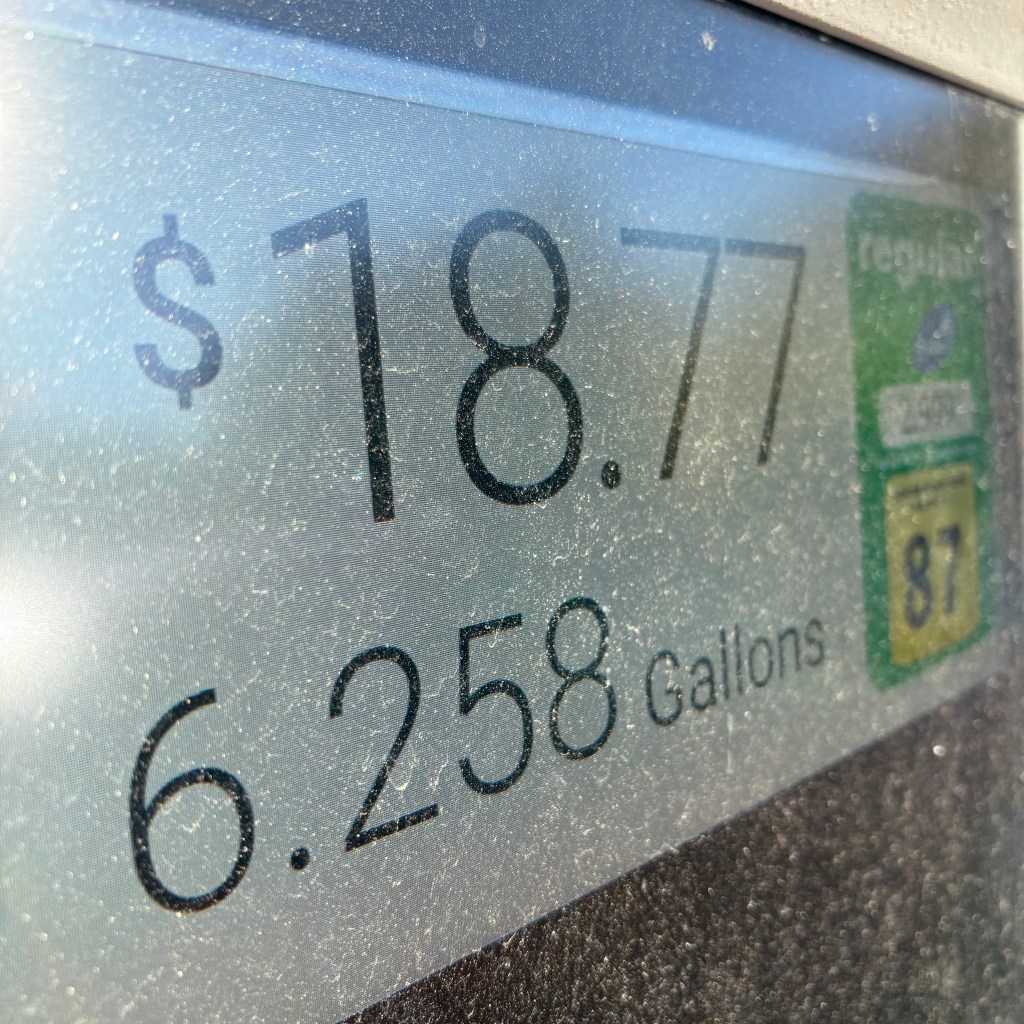
My 2009 Prius gets out of the garage an average of just once each week at this point. That’s to take my 89-year-old mom, who lives 45 minutes away from me, on a walk on a greenway near her (I transport both my mother and her wheelchair to and from the greenway in my car).

The rest of the week I ride my bike as my primary transportation (sometimes combined with buses and trains) — for a total of about 2,500 miles per year (miles I would have been driving my car instead).
Gas cost per month? $20 (or less). That’s under $250 per year.
Bike-riding delivers many other cost savings to my life, as well, but what’s also interesting are the benefits to my city of me riding my bike everywhere. Check this out:
CO₂ avoided: about 0.8 metric tons every year
That’s roughly the same as not burning 90 gallons of gasoline. Or — if you prefer a more poetic image — like planting 13 tree seedlings and letting them grow for 10 years. Just from pedaling to the grocery store, the MARTA station, the coffee shop, or the dentist.
Cleaner air (the stuff that actually affects our lungs)
Cutting those 2,500 car miles also avoids around nine pounds of smog-forming pollutants — the nitrogen oxides and VOCs that make air quality worse in metro Atlanta. Nine pounds doesn’t sound like a lot until you picture that stuff filling the air we breathe. I’m one person with a bike. That’s it.
City money saved on roads
Our ZIP code (30338) is part of a region constantly repairing and widening roads, and every car mile we collectively avoid eases that burden. For my 2,500 reduced miles, transportation economists estimate my city saves around $70–$100 per year in direct roadway costs.
That’s a total of about $1,000 in community benefit
When you add up the broader stuff — cleaner air, a tiny bit less congestion, fewer crash-related costs, lower noise, less parking demand — the total public benefit of 2,500 bike miles is about $1,000 per year from just one little ol’ person.
That’s not even mentioning the economic impact of people on bikes to businesses (especially when they are women, who control 80% of all consumer purchase decisions). Don’t get me going about the $40,000 I spent at one supermarket one bike-basket full of groceries at a time, simply because they installed a bike rack.
Imagine what’s possible.
Discover more from Traveling at the Speed of Bike
Subscribe to get the latest posts sent to your email.
